First of all, my profuse apologies to my friends who kindly responded to the invitation to do this interview for the delay. I know it's been a long wait, but nevertheless, here it is!
In July 2013, several of my urban sketcher friends from Singapore attended the
Fourth international Urban Sketchers Symposium held at Barcelona. This is a yearly event where urban sketchers from all over the world gather in one city to attend workshops and sketch the city together. Some of them extended their stay to travel to other areas to do more sketching. I managed to touch base with 2 of them for this feature: Parka (who runs the famous
Parka Blogs), and Tony (whom we have affectionately dubbed the mascot of Urban Sketchers Singapore).
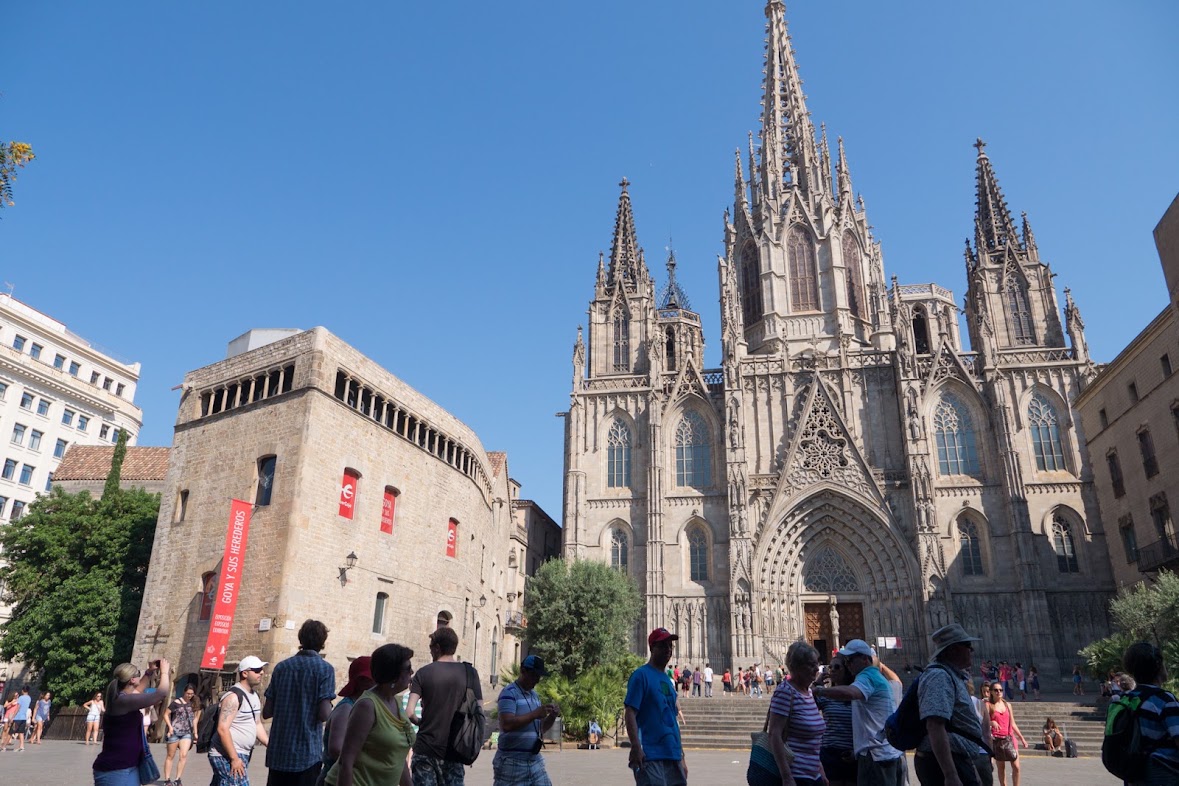 |
Barcelona
Copyright © Teoh Yi Chie 2013. Used with permission. |
SD: Can you tell us about the Urban Sketchers Symposium. What is it about?
Tony: It is a three-day affair where the urban sketchers from
all the world come together to share and exchange their tips and
knowledge on urban sketching.
Parka: It's a series a workshops organised by the main Urban Sketchers
group. A group of sketching instructors from all over the world would
come and teach those who have registered for the courses
 |
Paul Wang sharing his palette
Copyright © Teoh Yi Chie 2013. Used with permission. |
SD: What inspired you to go for it?
Tony: I love to travel and experience new things in new environments.
Parka: I wasn't there for the workshops, which I thought was too pricey. I
was there to join Tia, Paul, KK (Kiah Kiean) and Pramote for their sketching trip
after the symposium was over.
 |
Pramote (from Thailand) at work
Copyright © Teoh Yi Chie 2013. Used with permission. |
SD: What did you do there?
Tony:
It was always exciting to look forward to the day when I woke up every morning. Every day was a totally different experience. There was never
a dull moment and there was no time to be lonely because there were many things
to see and to do. Walking around and sketching the city kept us busy from
morning till night. Eating alone or in the good company of friends can be a real adventure itself.
Parka:
Those who, like myself, did not register for the workshops could join the sketchcrawls that were organised each day. The organizers had the locations all marked out on the map so
it was rather convenient to just follow the map and cover the places on
foot and sketch.
On hindsight, it was good that I didn't go for the
workshops. I would not have been able to sketch as much if I had
attended them. That gave me the opportunity to draw from 10am to 6pm, covering many places in Barcelona.
Even though I joined the sketchcrawl, I was only with
the group at the first location for each day. I went around on my own to draw after that. You can draw more when you're alone, though you do meet
sketchers along the way. I met lots of sketchers who were just there for the sketchcrawls.
 |
Urban Sketchers at work (Tony at far left)
Copyright © Teoh Yi Chie 2013. Used with permission. |
SD: Artists from all over the world attended the symposium. Who were you excited to meet at there, and why?
Tony:
Before I came to Barcelona, I had no idea who would be attending, so I came with an open mind. On the day of the symposium itself, it was overwhelming to see famous faces which I had
only previously seen on Facebook. Several
people left a very good impression, and they will be etched in my mind for a long time to come, such as Gerard Michel, Lapin and Santi Salles. These individuals are gentle and humble despite their fantastic and expressive sketching styles. Their passion for sketching is very infectious. There is so
much to learn from these masters.
Parka:
Nina Johansson - I like the colours she uses for her sketches.
Gerard Michel - If I'm
not wrong, He teaches architecture drawing in Belgium. His architecture drawings are marvelous. They are
simple but they convey detail. He's very precise with his sketches and I
attribute it to his intense observation skills. He even gave me a copy
of his published sketchbook - for free! His real sketchbook and printed
sketchbook look identical.
Pete Scully - I follow his blog and like his sketches. It was fun talking to him on the last sketchcrawl.
Lapin - It's pretty cool to see him sketching people live.
Other people I met include:
And many more.
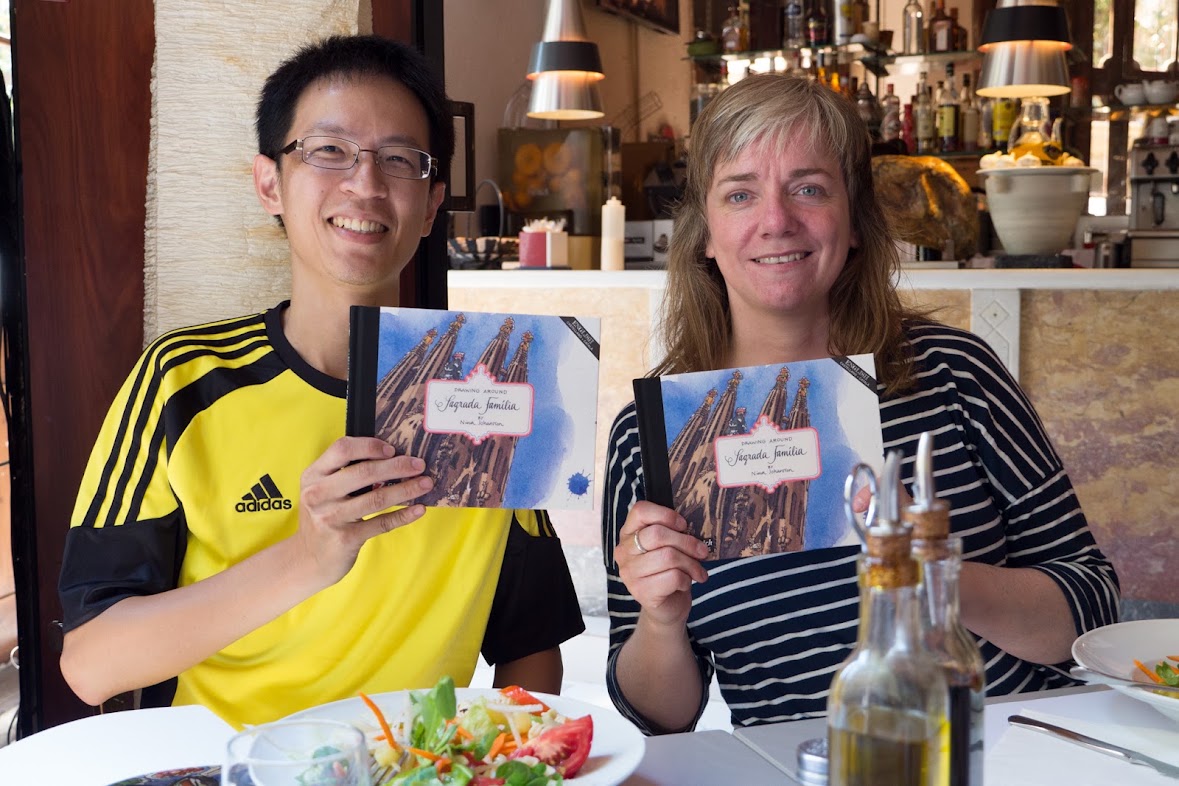 |
Parka with Nina Johansson
Copyright © Teoh Yi Chie 2013. Used with permission. |
SD: What about the trip was memorable for you?
Tony:
Apart
from having the opportunity to attend the Urban Sketching Symposium, the highlight of my trip has to be the Sagrada Família.
It was an emotional experience to have the chance to visit, in my
opinion, the most beautiful church building in the world. It was
certainly a jaw-dropping experience to visit not only the interior and
exterior, but also the tower.
Parka:
It was fun sketching with other like-minded people. It's like our
local sketchwalk in Singapore, but with new people. Of course, you're in a new
environment, and sketching heightens the sense of being there.
The most memorable event would probably be teaching a
non-sketcher friend Carole how to sketch. She was there to accompany her
sketcher friend Beliza who was there for the symposium. They are from
Luxembourg. I taught Carole for an hour or so on the basics of
sketching, and she could draw the
Arc de Triomf at
Barcelona the next day! Now I will tell this story to anyone who says to me that they can't draw.
 |
Sagrada Família interior
Copyright © Teoh Yi Chie 2013. Used with permission. |
 |
Sketches in Granada
Copyright © Teoh Yi Chie 2013. Used with permission. |
SD: How long was the trip? Besides Barcelona, where else did you go?
Tony:
I spent 10 days in Barcelona only.
Parka:
SD: Which place did you like the most, and why?
Tony:
I
enjoyed the Mar Bella Beach, the nude beach, very much. I love the water,
sand, and the sun. It was so relaxing to spend time there after the
symposium's hectic schedule.
Parka:
I'm more interested in architecture so I guess I liked Barcelona most. They have really amazing architecture. There are buildings that
date back to the Middle Ages! I could have drawn at every junction but didn't have the time.
This is my first trip to Europe so it's great to be able to check out how people live in other countries.
SD: How many sketches did you manage to complete?
Tony:
I never think about how many sketches should I do. I am quite selective about choosing the subject matter that draws to me to sketch it, depending on my mood.
Parka:
I brought along an A4 landscape moleskine sketchbook and managed to
fill the 60 pages in it. There's also a smaller square sized sketchbook
that I used for smaller sketches.
 |
| Copyright © Teoh Yi Chie 2013. Used with permission. |
 |
| Copyright © Teoh Yi Chie 2013. Used with permission. |
SD: What were your choice of materials? Any particular reason you chose them?
Tony:
It
was a real headache for me to decide which materials I wanted. Each
time, I tried not to carry too many things, I ended up carrying more. The four most important items I carried at all times were my stool, technical ink pens of various thickness, watersoluble crayons, and waterbrushes. Of course, I brought along some sketchbooks too.
Parka:
Pen, ink and watercolour. I refilled two Pilot Techpoint pens and
almost used them up. They are technical pens. For this trip, I
decided to use technical pens, which was more convenient than having to refill fountain pens.
I brought Daniel Smith watercolour paints. They come in tubes, but I squeezed them into half pans. They are actually from
Whee Teck and I was testing them out. All the colours I chose were transparent ones that would work well with my line art.
 |
| Copyright © Teoh Yi Chie 2013. Used with permission. |
SD: Do you recommend others to go for the Symposium? Why or why not?
Tony:
Anyone can go and take part in Symposium depending on their
financial ability. One must be able to enjoy life to fullest. You need to be fit
because you have to be prepared physically for long walks. You will be
ambassador for your country. Come with open mind and be humble. You should be able to do your own independent research to search for sketching locations thru research work because some volunteers are not paid to help you.
Parka:
It really depends on your style of learning. I prefer to spend the price I might have paid for the symposium on instructional
artbooks. I like books better.
If you're there for the workshops, you won't have time to sketch around the city unless you spend extra days there.
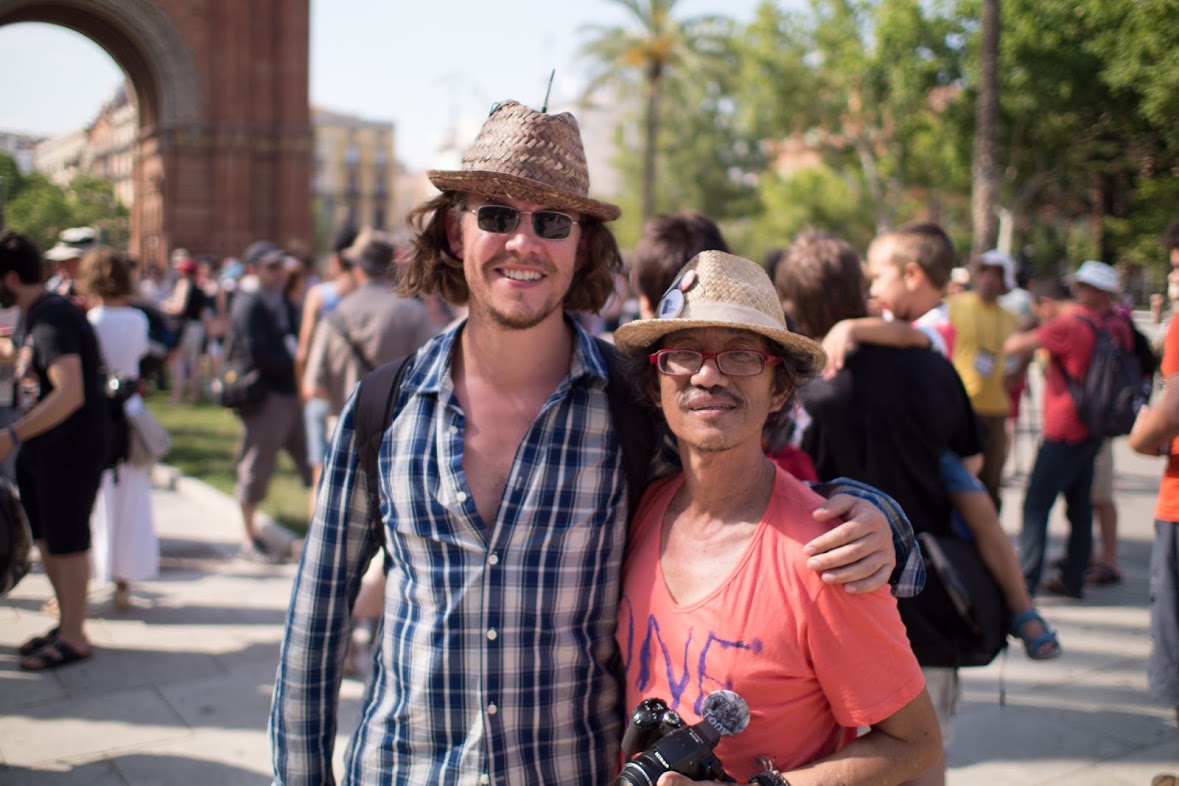 |
Tony (right)
Copyright © Teoh Yi Chie 2013. Used with permission. |
SD:: You are pretty experienced sketchers. Do you have any advice for
someone who is just starting out and wants to try sketching on vacation?
Tony:
Just enjoy the the sketching process as you build up your art foundations at your own pace.
Parka:
Don't bring too much drawing equipment, especially if you're not going to use them.
I brought only three pens, three brushes, pencil and eraser, watercolour.
Bring a big piece of eraser if you want to use pencil.
Get a good, portable, and light chair so that you can sit anywhere to draw.
 |
Parka's sketching kit
Copyright © Teoh Yi Chie 2013. Used with permission. |
Be aware of pickpockets. Never underestimate them.
They could range from small kids, to mothers, to buskers. Quite a few
people lost their stuff and money during the symposium. Keep everything in a zipped pocket.
Because sketching takes time, you have to expect
that you'll visit less places. But you'll be able to remember those
places you visited better because you spent more time there sketching.
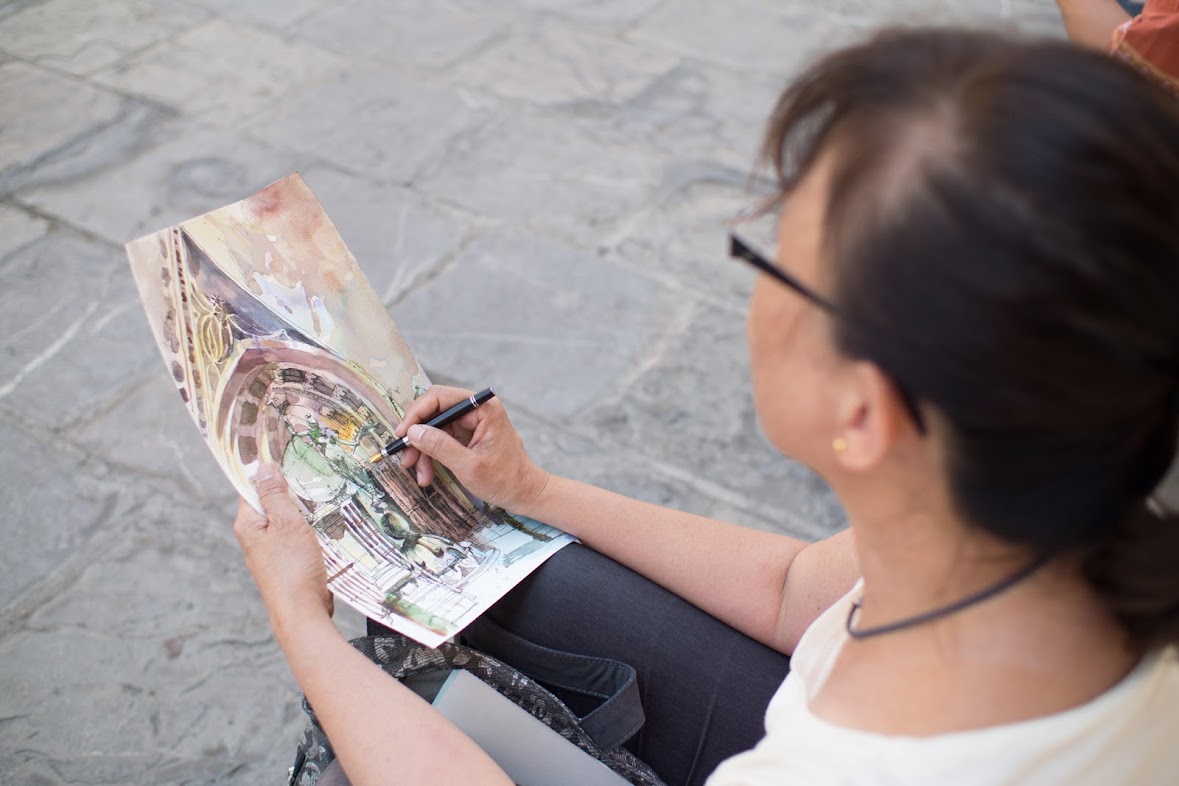 |
Mdm Tia at work
Copyright © Teoh Yi Chie 2013. Used with permission. |
SD: Is there anything else you would like to share?
Tony: Many of us rush through life and so fail to appreciate its beauty. Slow down to enjoy
life.
SD: Do you have online gallery/blog where people can view your artwork?
Tony:
No,
I have not had the opportunity to set up a gallery or blog for people
to view my artwork online. I am too busy sketching,
which is so addictive.
Parka:
All my sketches from Spain are here:
All my blog entries made in Spain are here:
Aaaannddd.... Here's the video of the trip made by Parka!
Thank you so much for your time, guys!


